Physical Address
304 North Cardinal St.
Dorchester Center, MA 02124
Physical Address
304 North Cardinal St.
Dorchester Center, MA 02124

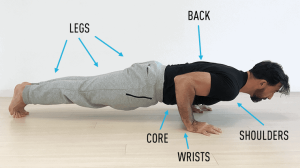
The push-up is a cornerstone exercise, a fundamental movement pattern that builds strength, endurance, and overall fitness. It’s a fantastic bodyweight exercise accessible to almost everyone. However, the simplicity of the push-up can be deceiving. Many people perform push-ups with incorrect form, diminishing its benefits and increasing the risk of injury. This guide will help you understand and achieve proper push up form, identify common mistakes, and provide actionable steps to correct them.
Before diving into common mistakes, let’s establish what constitutes a technically sound push-up. A good push-up engages multiple muscle groups simultaneously, including the chest (pectorals), shoulders (deltoids), triceps, core, and even your glutes and legs. It’s a full-body exercise when executed with proper push up form. Understanding the basic mechanics is crucial for improvement and preventing injuries.
Start in a plank position, hands shoulder-width apart (or slightly wider), fingers pointing forward. Your body should form a straight line from head to heels. Your core should be engaged, preventing your hips from sagging or rising. This is the foundation for achieving and maintaining proper push up form throughout the entire movement.
Lower your body in a controlled manner until your chest nearly touches the floor. Keep your elbows at a 45-degree angle to your body. This angle is crucial for protecting your shoulder joints. Push back up to the starting position, maintaining a straight line from head to heels. Squeeze your chest at the top of the movement. Focusing on controlled movement is paramount to achieving proper push up form.
Now, let’s explore some of the most frequent errors people make when performing push-ups and how to fix them. Recognizing these mistakes is the first step towards achieving proper push up form.
Sagging hips indicate a weak core and an inability to maintain a straight line from head to heels. This puts unnecessary strain on your lower back and reduces the effectiveness of the exercise.
Elevated hips, or “piking,” occur when your hips rise into the air, resembling an inverted V shape. This shifts the focus of the exercise away from the chest and triceps, making it easier but less effective.
Flaring your elbows outwards puts excessive stress on your shoulder joints, increasing the risk of injury. It also reduces the effectiveness of the exercise by shifting the focus away from the chest and triceps.
Looking down or straining your neck during push-ups can lead to neck pain and discomfort. It also disrupts the natural alignment of your spine.
Only going halfway down during a push-up significantly reduces its effectiveness. You’re not fully engaging the target muscles and limiting the potential for strength gains.
Rushing through push-ups compromises your form and reduces the time your muscles are under tension, diminishing the benefits of the exercise. Controlled movements are key.
Once you’ve mastered proper push up form, it’s important to progressively increase the difficulty of the exercise to continue challenging your muscles and promoting growth. This principle, known as progressive overload, is essential for long-term progress.
The simplest way to increase the difficulty is to increase the number of repetitions you perform in each set. Start with a manageable number of repetitions and gradually increase the number as you get stronger.
Another way to increase the volume of your workout is to add more sets of push-ups. Start with 2-3 sets and gradually increase to 4-5 sets as you progress. Remember to prioritize proper push up form over simply adding repetitions.
There are numerous push-up variations that can target different muscle groups and increase the difficulty of the exercise. Experiment with different variations to challenge your muscles in new ways.
We’ve mentioned core engagement throughout this guide, but it’s worth emphasizing its importance. A strong core is essential for maintaining proper push up form and preventing injuries. Your core muscles act as a stabilizer, preventing your hips from sagging or rising and ensuring a straight line from head to heels.
Incorporate core strengthening exercises into your routine to improve your push-up performance and overall stability.
It’s important to listen to your body and avoid overtraining. Pushing yourself too hard can lead to injuries and setbacks. Start slowly and gradually increase the intensity and volume of your workouts. Rest and recovery are just as important as training. Aim for at least one day of rest per week to allow your muscles to recover and rebuild. Remember that consistent effort with attention to proper push up form yields the best results.
If you’re unsure about your push-up form or experiencing pain, consider seeking guidance from a qualified personal trainer or physical therapist. They can assess your form, identify any underlying issues, and provide personalized recommendations to help you achieve your fitness goals safely and effectively. A professional can provide tailored advice to ensure proper push up form is achieved.
The push-up is a powerful exercise that can provide numerous benefits when performed correctly. By understanding the principles of proper push up form, identifying common mistakes, and implementing the corrective strategies outlined in this guide, you can unlock the full potential of this fundamental movement. Remember to focus on controlled movements, engage your core, and progressively overload your muscles to continue making progress. Consistency and dedication are key to achieving your fitness goals. By mastering the push-up, you’ll be well on your way to a healthier, stronger, and more resilient you. Focusing on proper push up form will help you achieve the best results and prevent injuries.